Commercial roofing Tomball TX for working buildings
commercial roofing Tomball TX helps property owners and managers stop leaks, address storm damage, and plan roof work before it disrupts business. We inspect the roof system, explain the repair or replacement options, and coordinate practical work around your building's use. From flat-roof leaks to aging materials, our team serves Tomball businesses with a clear next step and a focus on keeping water out.
System matchingWe identify materials before repair.
Closeout checkWe review repaired roof details.
What Commercial Roofing Includes
Commercial roofing covers inspection, leak diagnosis, repair, maintenance, and roof-system replacement for business properties. We evaluate the roof surface and details that move or shed water, then explain the work needed for the observed condition. The job may include membrane or flashing repair, drainage corrections, and replacement of damaged sections. Broader structural work or interior restoration is handled as a separate task when the inspection identifies a need.
Roof Condition Review
We inspect accessible roof areas, seams, edges, drains, penetrations, and transitions. Interior leak locations help guide the search, but we trace the water path rather than assuming the entry point is directly above the stain.
Leak Source Diagnosis
Our team checks likely failure points and documents visible conditions, including open seams, damaged flashing, and signs of moisture. We explain which finding connects to the reported problem and what work would address it.
System-Compatible Repair
Repairs use an approach suited to the existing roof system and affected detail. Depending on the roof, that can include sealing or restoring a seam, replacing damaged flashing, or repairing a localized membrane section.
Replacement Planning
When the roof has widespread deterioration, we review removal or replacement options, access needs, and work sequencing. We consider drainage, rooftop equipment, and occupied areas so the plan fits the property.
Completion Review
We review the repaired or replaced area, check related transitions, and clear the immediate work zone. You receive a summary of completed work and practical observations for future roof checks.
Homes and businesses.
The approach is the same for a home and a business. What changes is the access, the schedule and who needs the paperwork.
Homes and Tenants
We help Tomball homeowners and tenants identify roof leaks, storm damage, and worn materials. We explain what we find and how the repair affects your home.
Ceiling stains after heavy rain
Missing or curling shingles
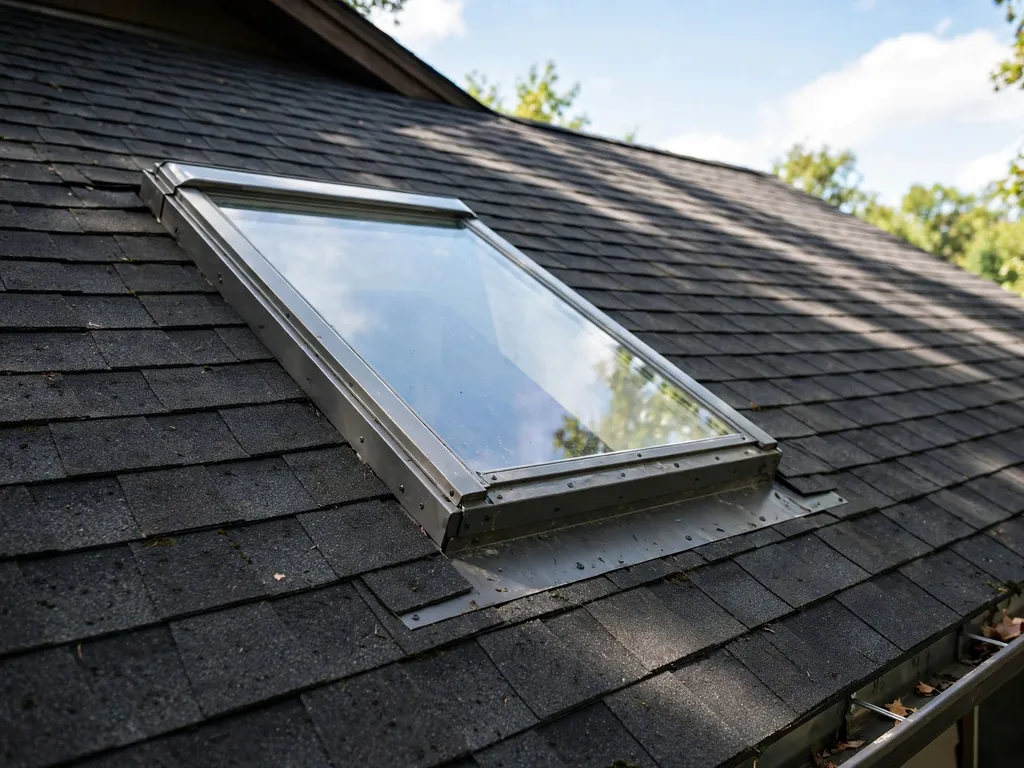
Leaks around a skylight
Business Properties
We work with Tomball owners and property managers to locate leaks, assess roof systems, and plan repairs around building access. You get clear details on affected areas.
Water near inventory or equipment
Recurring low-slope roof leaks
Storm damage at roof edges
Commercial Roofing Tomball TX: The Work
A plain-language look at what Commercial Roofing involves and when it is needed.
commercial roofing Tomball TX is a building-envelope service that repairs, maintains, or replaces roof systems to keep commercial properties weather-tight. Work starts with identifying the roof type, drainage paths, penetrations, and signs of trapped moisture. We check membrane seams, roof flashing, edges, and visible roof decking before recommending a repair or replacement. A sound plan accounts for the building's use, access, and water flow, not just the spot where a ceiling stain appears. That distinction helps you address the source instead of repeatedly patching symptoms.
Tomball businesses face heavy rain, humidity, strong sun, and seasonal hail or wind that can expose weak seams and aging materials. Commercial roofing in Tomball, Texas needs to account for roof access, drainage, HVAC equipment, and the hours your property operates. If you are comparing commercial roofing cost in Tomball TX, the roof area, system type, water damage, and access conditions all matter. We inspect the actual conditions first, then explain which repairs are urgent and which work can be planned.
Commercial roof work identifies the water path, corrects roof failures, and protects the building's interior.
Service
Inspection, repair, maintenance, or replacement of roof systems on business buildings.
Call timing
Call for active leaks, storm damage, recurring stains, or widespread roof deterioration.
Job steps
Expect roof checks, a clear repair plan, coordinated work, and a completion review.
What to Expect During the Job
Commercial roofing services Tomball follow a practical sequence: inspect, document, agree on the work, complete the repair or installation, and check the result. We keep you informed about access and work areas so you can plan around staff, tenants, and deliveries.
Initial Walkthrough
Our team starts by asking where water appears, when it shows up, and whether the leak changes with wind or rainfall. We walk accessible roof areas, check drainage and penetrations, and note interior staining or damaged finishes. A first inspection often takes 45 to 90 minutes, depending on roof size and access.
Listen
Access
Walkthrough
Find the Failure
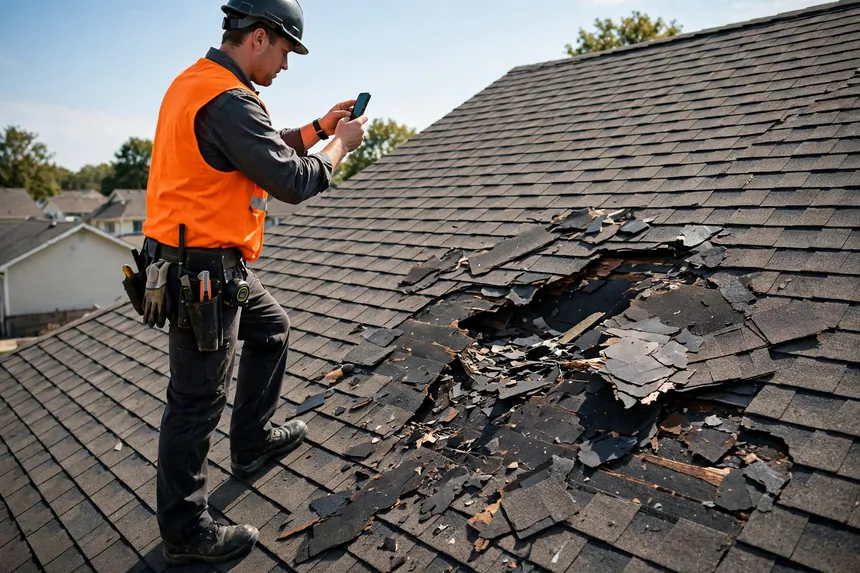
We inspect seams, edges, drains, flashing, and transitions instead of assuming the leak sits above the stain. A moisture meter can help assess damp areas where visible evidence is limited. We photograph relevant conditions and explain whether the issue is isolated, tied to broader deterioration, or connected to drainage.
Trace
Check seams
Document
Choose the Work Plan
You receive a plain explanation of the repair or replacement approach, materials, access needs, and expected work sequence. We discuss how the plan affects employees, tenants, parking, and rooftop equipment. If an active leak needs immediate attention, we prioritize water control before scheduling permanent repairs.
Review
Plan
Coordinate
Complete Roof Work
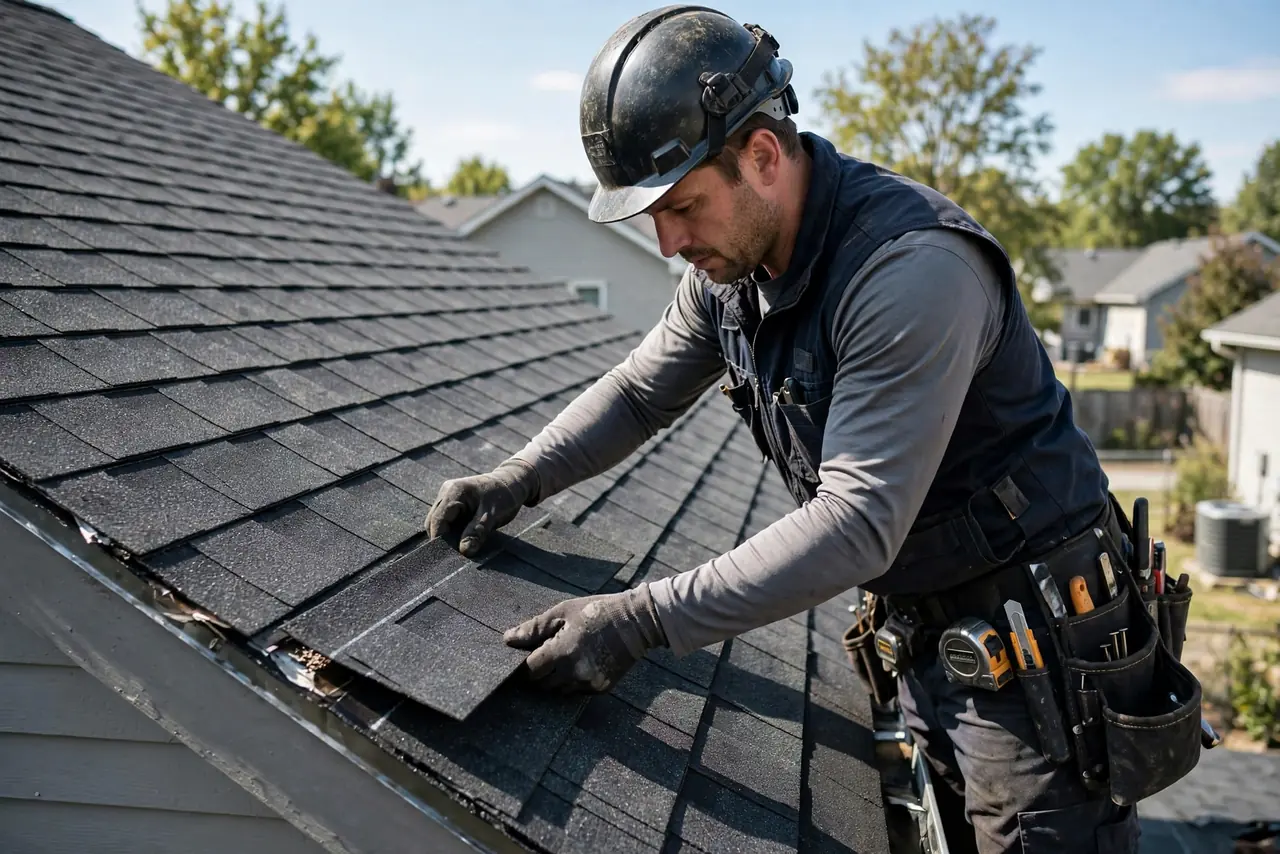
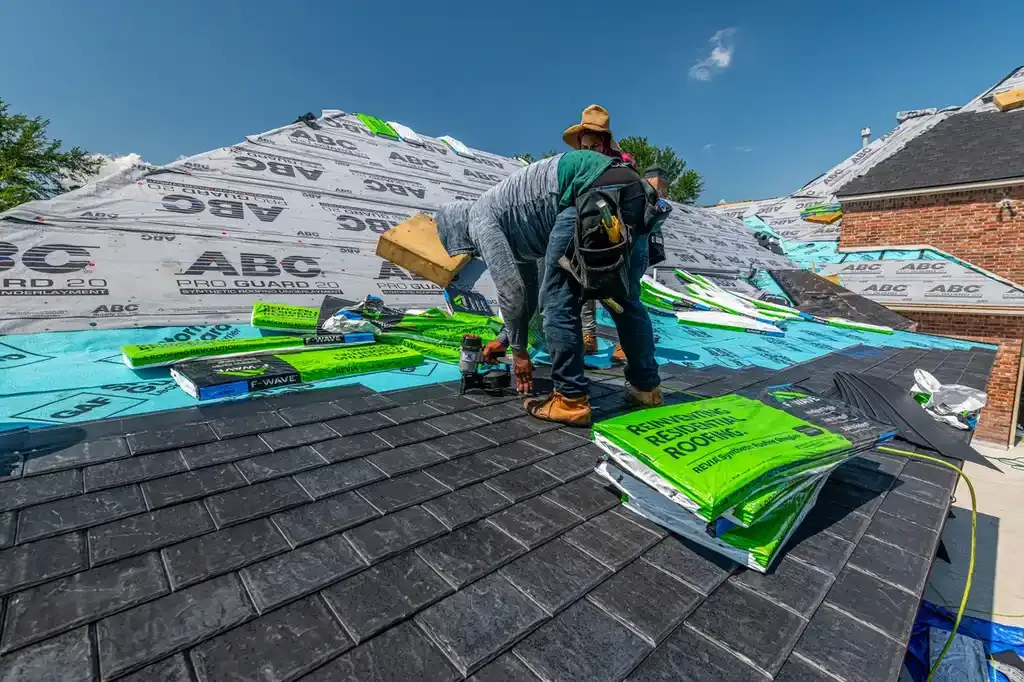
The crew protects the work area, removes damaged material where needed, and installs compatible repair materials using the appropriate system method. A focused repair can take several hours; a replacement may run from a few days to more than a week based on area, layers, and weather. We keep debris and access points managed.
Protect
Repair
Manage debris
Check and Document
After the work, we review repaired seams, flashing, drainage, and exposed transitions, then clear the immediate work area. You receive a summary of completed work and any conditions that need future attention. We explain what to watch for after rain and how to arrange routine follow-up checks.
Inspect
Summarize
Follow up
Tools and Roof Methods
Move across a circle, or focus it and press Enter, for an illustrative thermal view of the photograph.
Moisture meter
We use it to assess suspected damp areas when visible staining alone does not show how far moisture has spread.
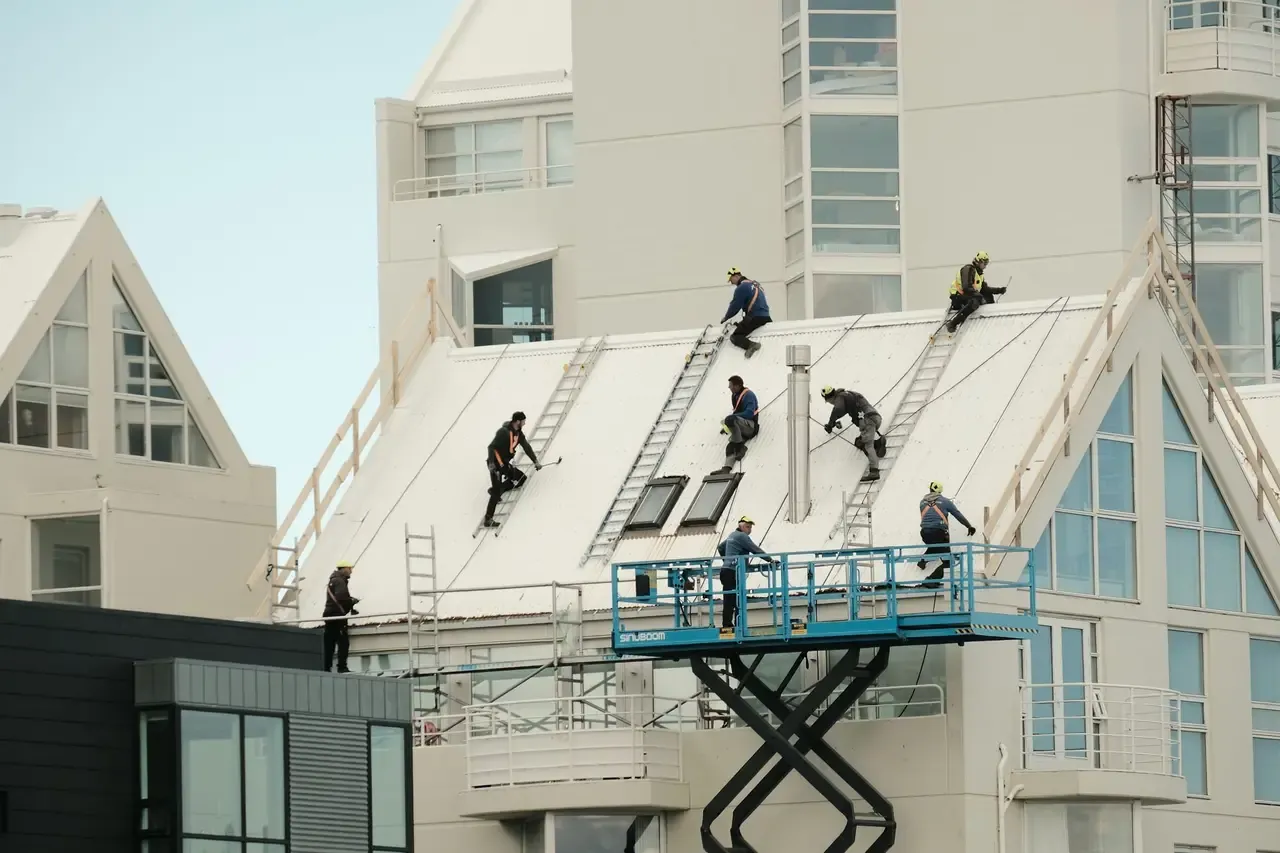
Roofing ladder
A secured roofing ladder supports controlled access to roof areas, edges, and inspection points.
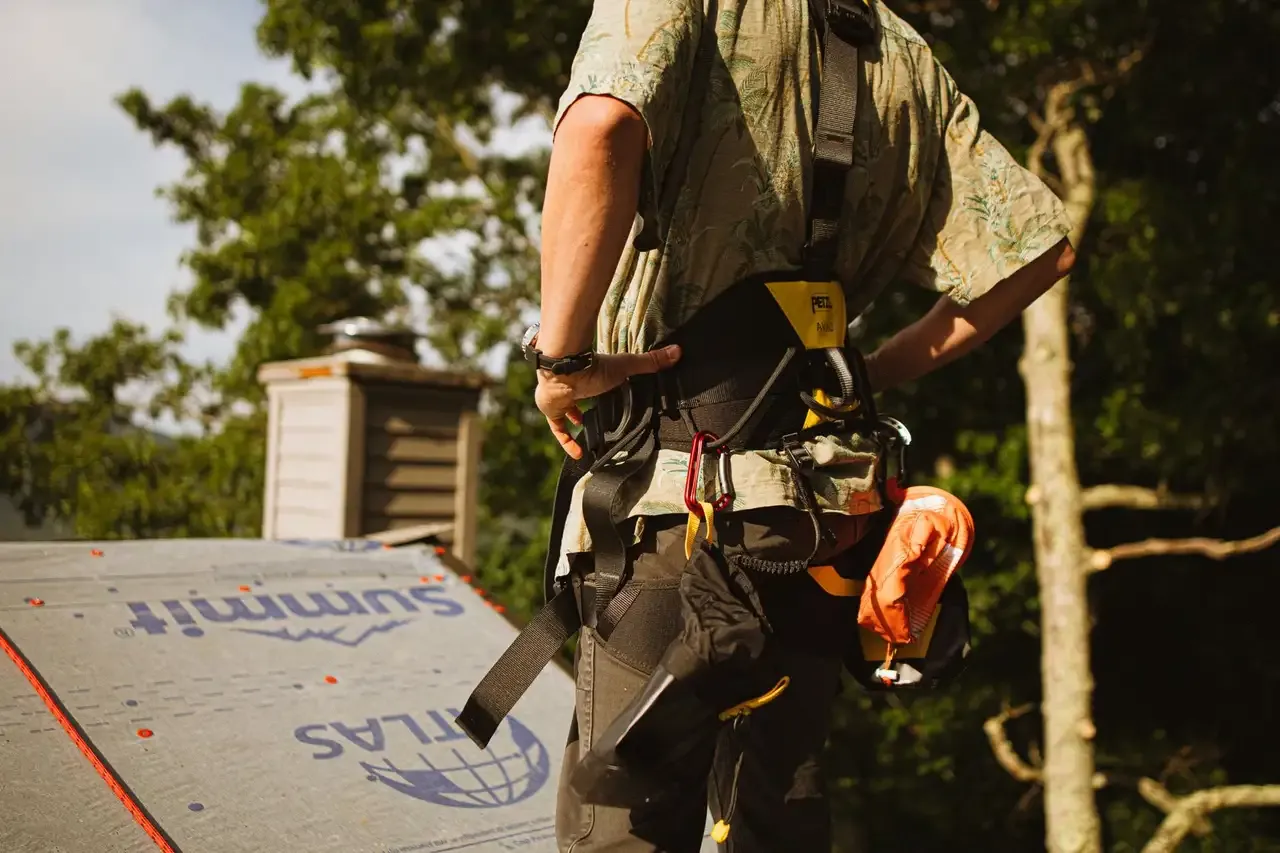
Fall protection harness
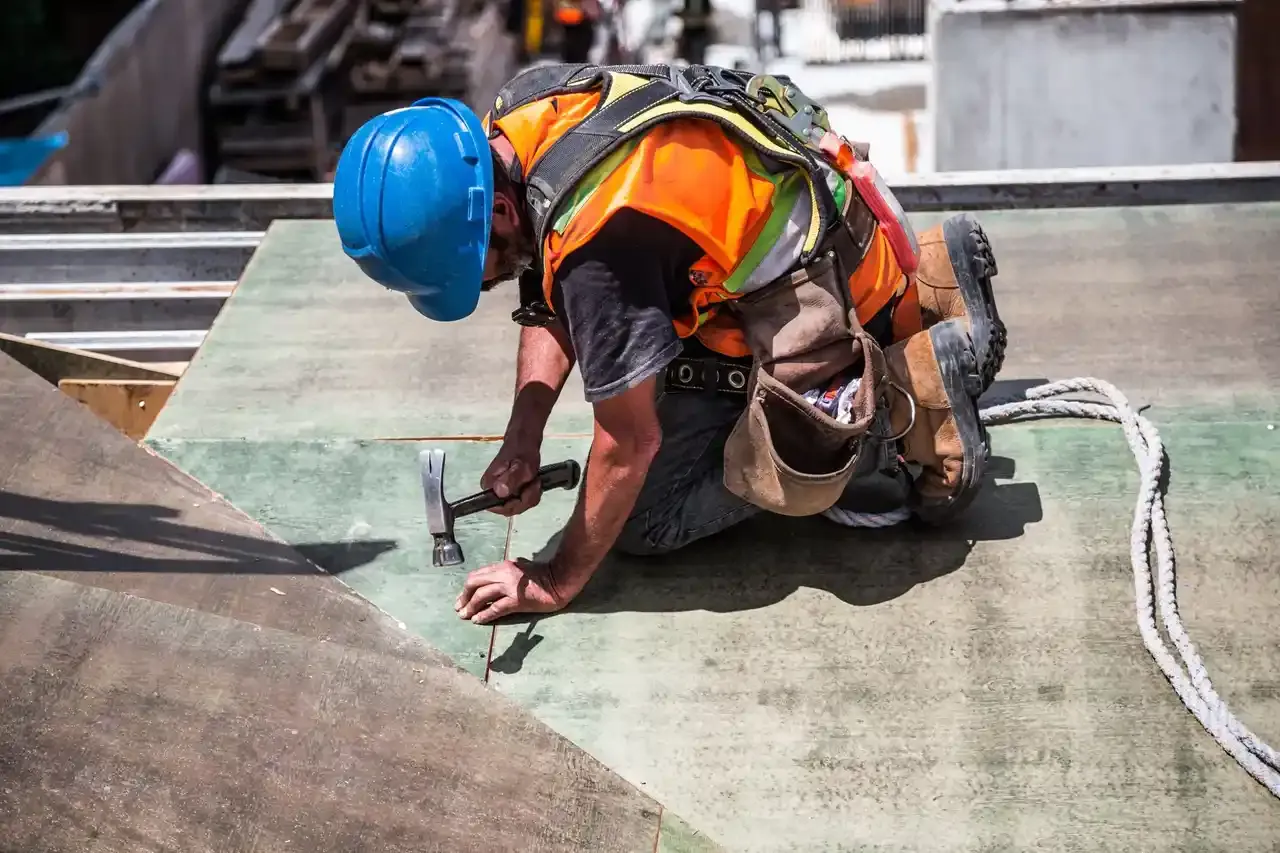
Our crew uses fall protection equipment when roof access and working conditions require it.
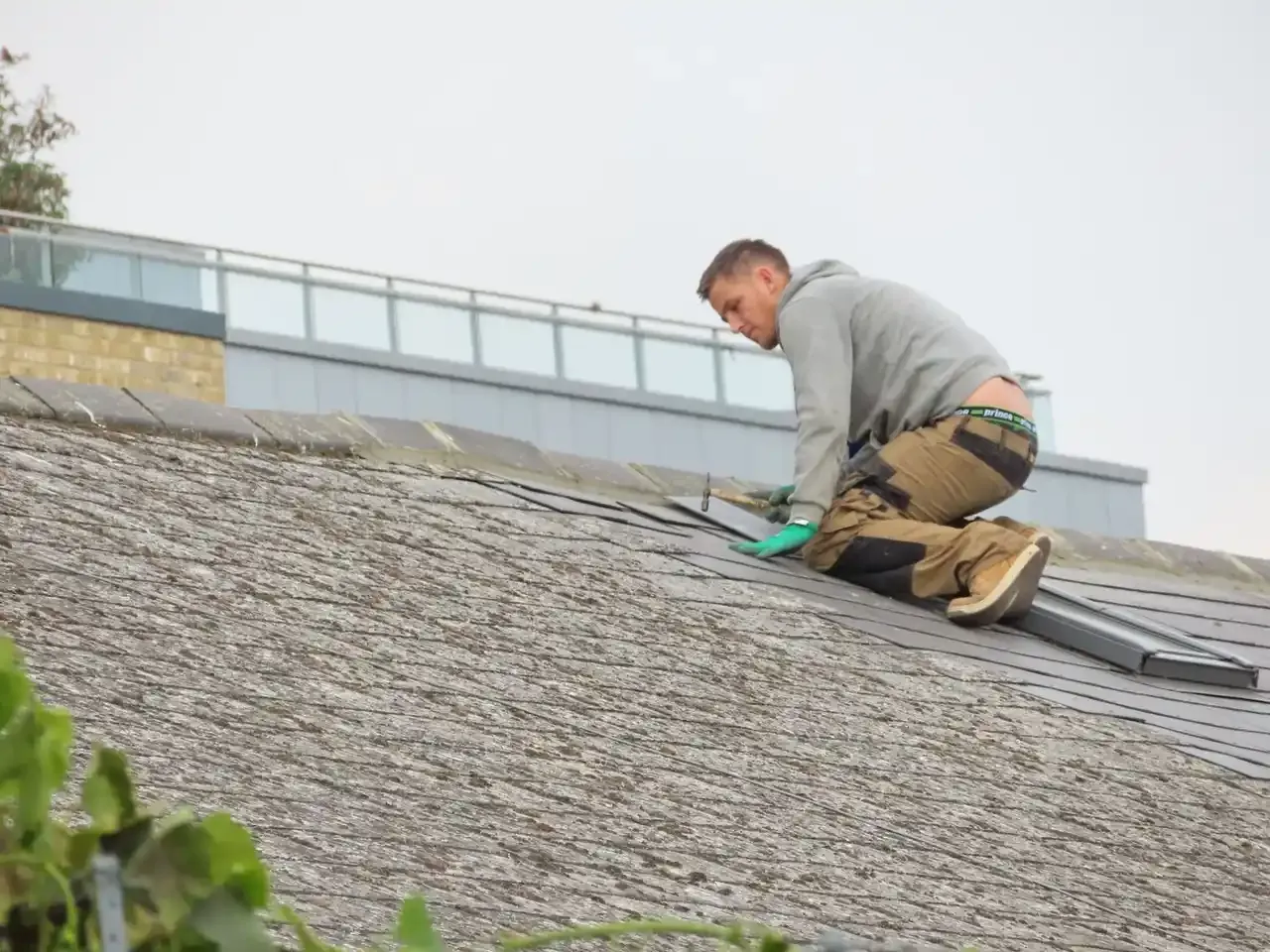
Roofing hammer
We use a roofing hammer for appropriate fastening and detail work during repairs or installation.
Tin snips
Tin snips help shape metal components for roof-edge and flashing details where the system calls for them.
Thermal views are illustrative, generated from the photographs.
Methods
Water-Path Tracing
We begin with the interior evidence, then inspect the roof above and around it. Water can travel along a roof assembly before appearing indoors, so we check seams, transitions, drains, and penetrations. This method helps connect the visible symptom to the roof detail that needs attention.
System-Compatible Repair
We identify the existing roof material and select a repair approach that works with that assembly. For a TPO membrane or EPDM membrane, the repair must suit the material and seam condition. We prepare the affected area and review the adjacent detail to reduce the chance of leaving a nearby failure untreated.
Staged Replacement
For replacement work, we plan removal, inspection, and installation in manageable sections. The sequence helps protect exposed areas and coordinate access around business activity. We check the surface beneath as work proceeds and address damaged decking before covering it with the new roof system.
When to Call a Commercial Roofer
Office leak
A Tomball office reports water spots after an overnight downpour, but no roof opening is visible from the ground.
We inspect the area above the stain and follow likely water paths through seams, flashing, and rooftop penetrations. We check accessible interior evidence and explain whether the issue appears localized or connected to a broader system concern. That gives you a repair direction based on the roof, not guesswork.
Outcome: You know where water is entering, what repair addresses it, and which interior areas need attention before the next rainfall.
Retail storm
A shop near Tomball Town Center finds water near merchandise after a wind-driven storm.
We focus first on the active opening and affected stock area, then inspect roof edges, seams, and flashing for storm damage. Our team explains any temporary water-control work and the permanent correction needed for the roof system.
Outcome: The immediate exposure is addressed, and you have a clear plan to protect merchandise and reopen the affected area.
Drainage issue
A property manager sees recurring ponding and leak calls at a low-slope building in 77375.
We inspect drainage paths, drains, membrane condition, and the locations of previous repairs. We document repeated problem areas and compare localized repair with broader work. The review helps you set priorities across the roof instead of treating each leak as unrelated.
Outcome: You gain a roof-wide view of recurring trouble and can organize repairs around risk, access, and building use.
Warehouse moisture
A warehouse owner in 77377 notices damp ceiling insulation and a musty odor beneath an older roof.
We inspect the roof surface and accessible interior signs, using moisture checks where useful to assess affected areas. We look for likely entry points and damage that could require opening the assembly. Then we explain the repair or replacement path and its impact on warehouse operations.
Outcome: You can address the water source and plan any necessary material removal before moisture affects more of the building.
Downtown TomballTomball Town CenterNorthpointe
How Commercial Roofing Works in Tomball
Tomball's humid weather, intense summer sun, heavy rain, and seasonal hail put roof seams, edges, and drainage details under regular stress. We look for ponding, open transitions, and water entry around rooftop equipment, especially after a storm. Many local commercial properties combine low-slope roof areas with pitched sections or additions, so a repair must match each part of the assembly.
For business roofing Tomball TX customers, we coordinate access with operating hours, tenant activity, deliveries, and equipment locations. We also consider the route water takes off the roof, since blocked or undersized drainage can compound a small defect.
If you are looking for affordable commercial roofing in Tomball, Texas, the most useful first step is identifying the actual failure and the extent of affected material. Our team works across Harris County and discusses applicable building requirements for the specific project rather than assuming every roof has the same assembly or approval needs.
Downtown Tomball: Older commercial buildings can have several roof transitions from additions; we check those junctions along with the main roof area.
Tomball Town Center: Retail access and customer traffic shape staging, so we discuss work zones and deliveries before roof repairs begin.
Northpointe: Commercial properties with rooftop equipment need careful inspection around curbs, penetrations, and drainage paths.
Old Town Tomball: We assess roof edges and drainage details on existing buildings where repeated repairs may have changed the original assembly.
Heavy rainfall tests low-slope seams and commercial roof drains: Water that cannot drain promptly can collect around seams and penetrations. We check the path to drains and look for areas where ponding overlaps with damaged membrane or flashing.
High humidity makes concealed leaks slower to dry: Moisture can remain in insulation or ceiling systems after the visible leak stops. We use the interior evidence and roof inspection to judge whether a localized surface repair is enough.
We walk the property and review reported leak locations.
We discuss access routes and prepare the work area.
We check completed details and explain next steps.
From problem to finished result.
IllustrativeThe thermal view is generated from the photograph. It is not a measurement. Drag the handle, or use the arrow keys once it is focused.
Recurring Office Leak Resolved
Before: An office in Tomball had a ceiling stain that returned after each hard rain. Earlier surface patching covered the mark but did not stop the water. Damp ceiling material spread along one room edge, and the property manager could not tell whether the leak came from a drain, a seam, or a nearby roof penetration.
After: We traced the water path to a failed roof transition and repaired the affected detail. The work covered one localized roof section and took one working day, including the inspection and completion check. The manager received a summary of the repair and knew which ceiling area needed drying before finishes were restored.
Check the repaired transition after major storms and keep nearby drains clear. If a new stain appears, record when it happens and which room is affected so the roof inspection can follow the water path.
Warehouse Roof Replacement Planned
Before: A warehouse had multiple repairs across an aging low-slope roof, with recurring damp areas near rooftop equipment. Maintenance staff were spending time responding to separate leak reports, and each new repair made it harder to plan around inventory and loading activity.
After: We reviewed the roof condition and planned a staged replacement across the affected area. Work was sequenced over six working days, with access and loading zones discussed in advance. The property manager had a clear schedule, and the completed roof details were reviewed before the project closeout.
Schedule periodic visual checks of drains, equipment curbs, and seams. After strong storms, look for new interior stains and report them promptly rather than waiting for the next scheduled review.
Storm-Opened Edge Secured
Before: After a wind-driven storm, a Tomball retail property found water near an exterior wall and damp material beneath a roof edge. The leak was active, and customer access ran close to the affected area, making quick coordination important.
After: We inspected the edge, controlled the water entry, and repaired the damaged transition using materials suited to the existing roof. The active repair took about four hours, followed by a review of adjacent flashing. Staff received a clear update on the work area and completed repair.
After future wind events, check the interior perimeter for fresh staining and keep the roof edge visible during routine inspections. Report loose details or recurring moisture before the next heavy rain.
Solve Commercial Roof Problems Early
Leaks and roof damage rarely stay confined to the first visible mark. Water can spread through insulation, ceiling systems, and stored materials before the roof opening is obvious. We locate the failure, explain the repair options, and help Tomball property managers address the risk before it interferes with business.
Recurring stainA ceiling stain returns after every heavy Tomball rainRepeated moisture can damage ceiling tiles, insulation, inventory, and electrical areas. The stain may sit away from the actual roof opening, so an interior patch leaves the source active. We trace the water path from the affected room to roof seams, drains, penetrations, and flashing. Once we identify the entry point, we explain the repair and check nearby details that could allow water to travel. You get a targeted correction rather than another coat of paint over the stain.
Standing waterA low-slope roof holds water around drainsStanding water increases stress on seams and can find weak points in the membrane. Persistent drainage trouble also makes it harder to spot a new leak after a storm. We inspect drains, surrounding membrane, and the visible drainage path to understand where water is collecting. Our team identifies defects that need repair and explains any broader drainage concern. Clearing the immediate failure and correcting the relevant detail helps the roof shed water more effectively.
Storm openingStorm damage leaves an edge or seam exposedWind or hail damage can open the roof to driven rain, risking wet insulation, ceiling damage, and interruptions to staff or customers. We examine perimeter edges, membrane seams, flashing, and rooftop penetrations after the storm. If water is actively entering, we prioritize controlling the opening, then complete a compatible repair. We also note nearby damage so you can address related weak points in the same plan.
Repeat repairsAging roof repairs keep interrupting operationsRepeated callouts consume maintenance time and can leave tenants uncertain about leaks. Patching a broadly deteriorated system may cost more over time than planning replacement. We review repair history alongside the roof's current condition and identify areas where defects are recurring. If replacement is the more practical route, we explain why and discuss staging around your operations. You can plan the work before a failure forces an urgent response.
Keep Your Building Working
Stop roof water entry and protect business spaces with targeted work.
Stop Water at Its Source
A ceiling stain can be several feet from the roof entry point. We trace leaks around seams, drains, penetrations, and roof flashing, then repair the failure rather than covering the visible mark alone. That approach helps reduce repeat calls and protects insulation, ceiling systems, and stored inventory from continued moisture.
Plan Work Around Operations
We discuss access routes, occupied areas, deliveries, and sensitive equipment before work starts. For many repair visits, the active roof work takes a few hours; larger projects need a staged schedule. That coordination helps you keep customers and staff moving while the roof crew works above.
Make Replacement Decisions Clearly
When repairs no longer make sense, we compare the current system's condition with replacement options and explain what each addresses. You can weigh localized repair against full replacement using visible damage, moisture findings, and roof age rather than guesswork. Tomball commercial roofing should match the building's drainage and operating needs.
Reduce Storm-Related Exposure
After hail or high winds, we check membrane edges, flashing, rooftop penetrations, and signs of water entry. A prompt inspection helps identify damage before the next rain reaches interior finishes. If active leaking is present, we focus first on temporary water control and then on a durable repair plan.
What you receive
Clear records you can keep and share.
Photo log
Images of relevant roof conditions.
Work summary
Completed tasks and locations.
Inspection notes
Observed issues and follow-up items.
Material record
Materials used for the repair.
Repair or Replacement
The choice depends on how widespread the failure is and whether the surrounding roof remains serviceable.
Localized repair
Targets a contained defect in an otherwise serviceable roof.
Seam or flashing failure
Limited water entry
Sound nearby materials
Section work
Addresses a larger damaged area or related roof details.
Multiple nearby defects
Wet insulation area
Localized decking damage
Full replacement
Renews a roof with widespread deterioration or repeated failures.
Recurring repair history
Broad material wear
System nearing failure
Roof systems and details
TPO membrane
EPDM membrane
Metal panels
Roof flashing
Roof decking
Roof drains
Roof edges
Rooftop curbs
Service ZIP codes.
A list like this tells people straight away whether you cover their street. Not listed? Call and ask: it only takes a minute.
We had a leak showing up near the back offices after heavy rain. The crew checked the roof instead of just patching above the ceiling stain, found a problem at a seam, and explained the repair. They kept us updated about the work area, and the next rain did not bring water into the office.
After wind pushed rain under an edge, we needed the roof checked before the next storm. The team looked at the perimeter and flashing, showed us the damaged section, and completed the repair without closing the shop. The explanation was straightforward, and we knew what had been addressed.
Our low-slope roof had recurring water near a rooftop unit. The crew traced it to the transition rather than treating the interior stain, then repaired the detail and reviewed drainage with us. We appreciated having the work area and follow-up points explained in plain language.
Frequently Asked Questions
Typical 2026 pricing in this area changes with roof size, membrane type, tear-off needs, access, and concealed damage. We inspect the roof and explain the cost drivers before work begins. A localized seam repair is not priced like replacing wet insulation and decking across a large section.
A focused repair often takes 2 to 6 hours, while a commercial replacement commonly takes 3 to 10 working days. The schedule depends on roof area, material delivery, tear-off layers, weather, and how the building stays accessible. We discuss staging and daily work zones so you can plan staff and deliveries. Rain can interrupt open-roof work, so the crew protects exposed areas as the job progresses.
Choose a commercial roofing company Tomball TX property owners can evaluate by inspection detail, system knowledge, clear repair reasoning, and documented work. Ask how the roofer traces leaks, handles active water entry, and coordinates occupied buildings. We explain what we see on your roof and connect each recommendation to a specific condition. The right fit is the team that can clearly show how its proposed work addresses your building's problem.
Same-day commercial roof repair in Tomball may be possible when the crew can safely access the roof and the repair materials are suitable. Active leaks, exposed roof openings, and water near electrical or stock areas should be reported first. We focus initial attention on controlling water entry, then identify the permanent repair. Share the property location, roof type if known, and the affected interior area when you call.
Tell us where the leak or damage is showing, and we will help identify the next practical step. Call Tomball Roofing Experts at (877) 791-3217 to discuss your commercial roof and arrange an assessment.
Call (877) 791-3217 to discuss roof replacement, roof repair, a leak, or storm damage at your Tomball property. Our phone team can hear the details and connect your request with an independent roofing company. Contact us during regular business hours, Monday through Friday, 8 a.m. to 6 p.m.; for active water entry, describe where it is happening when you call.